What Is Echinacea Purpurea?
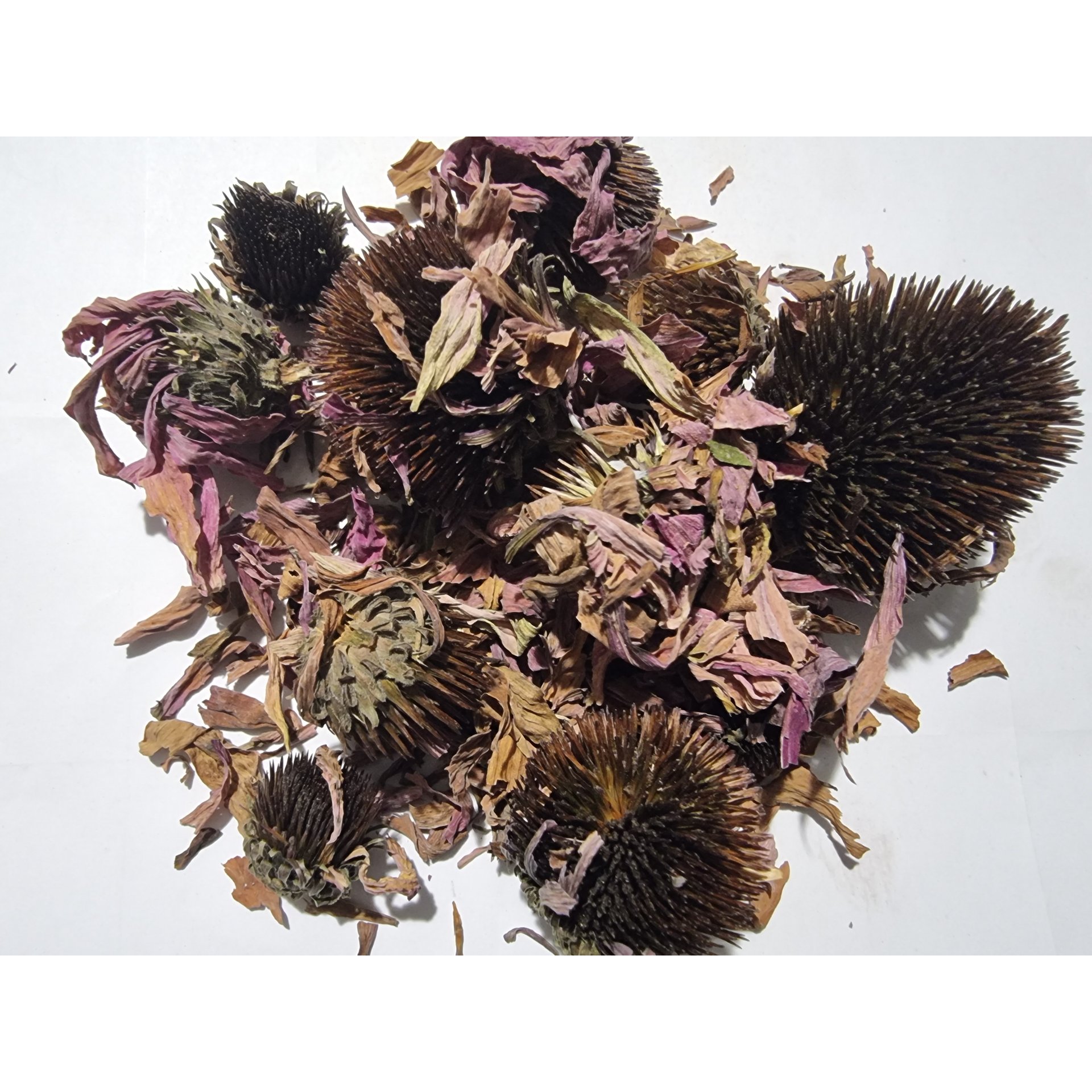
Echinacea purpurea, the purple coneflower, is a perennial wildflower of the daisy family native to the prairies and open woodlands of central and eastern North America. It is easy to recognize by its large, daisy-like flowers with drooping pink-purple petals around a spiky, orange-brown central cone. The name echinacea comes from the Greek echinos, hedgehog, after that spiny cone.
Echinacea was one of the most important plants of the Native American peoples of the Great Plains, and in the late 19th century it became one of the best-selling herbal products in America. Today it is also one of the most popular garden perennials in the world, loved by bees and butterflies.
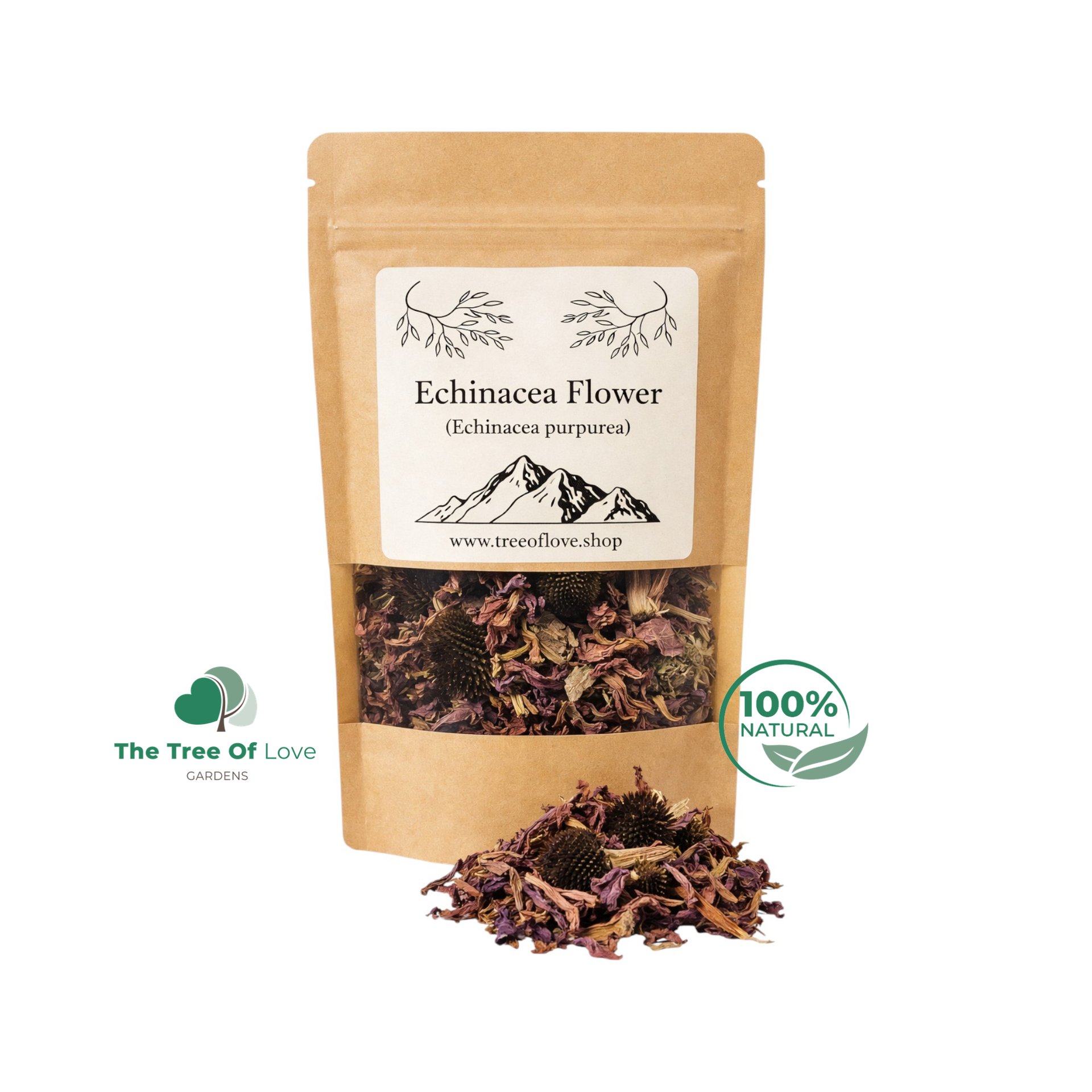
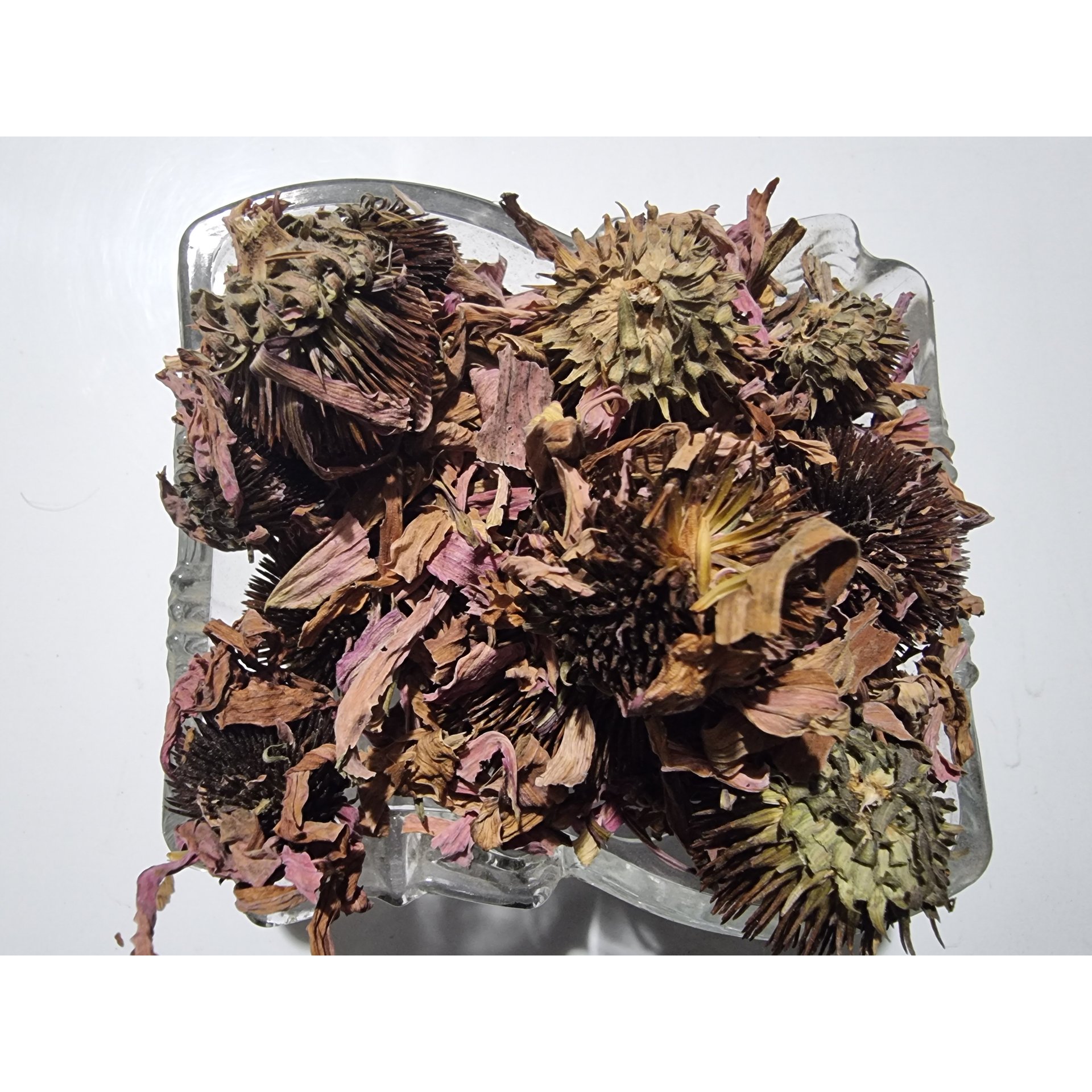
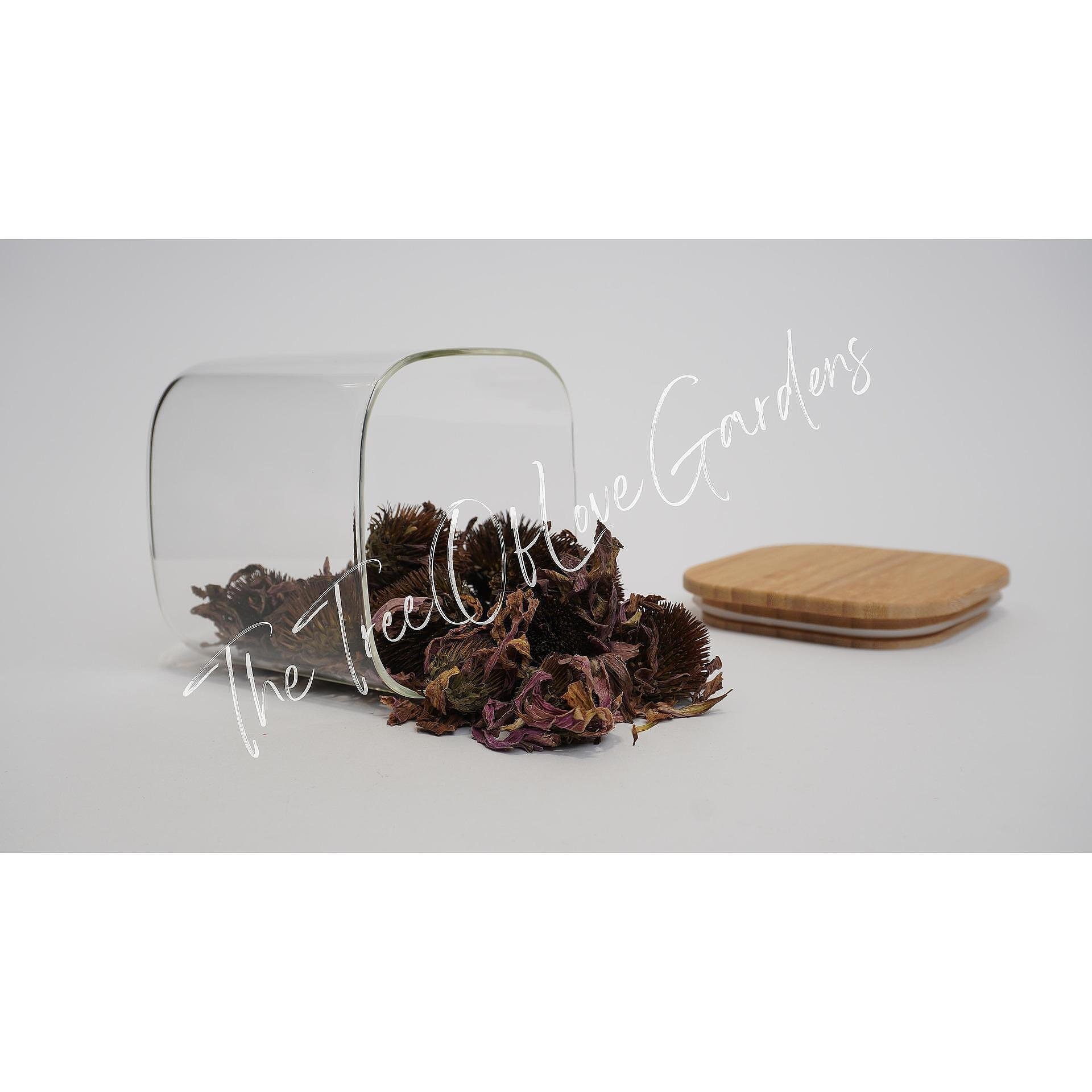
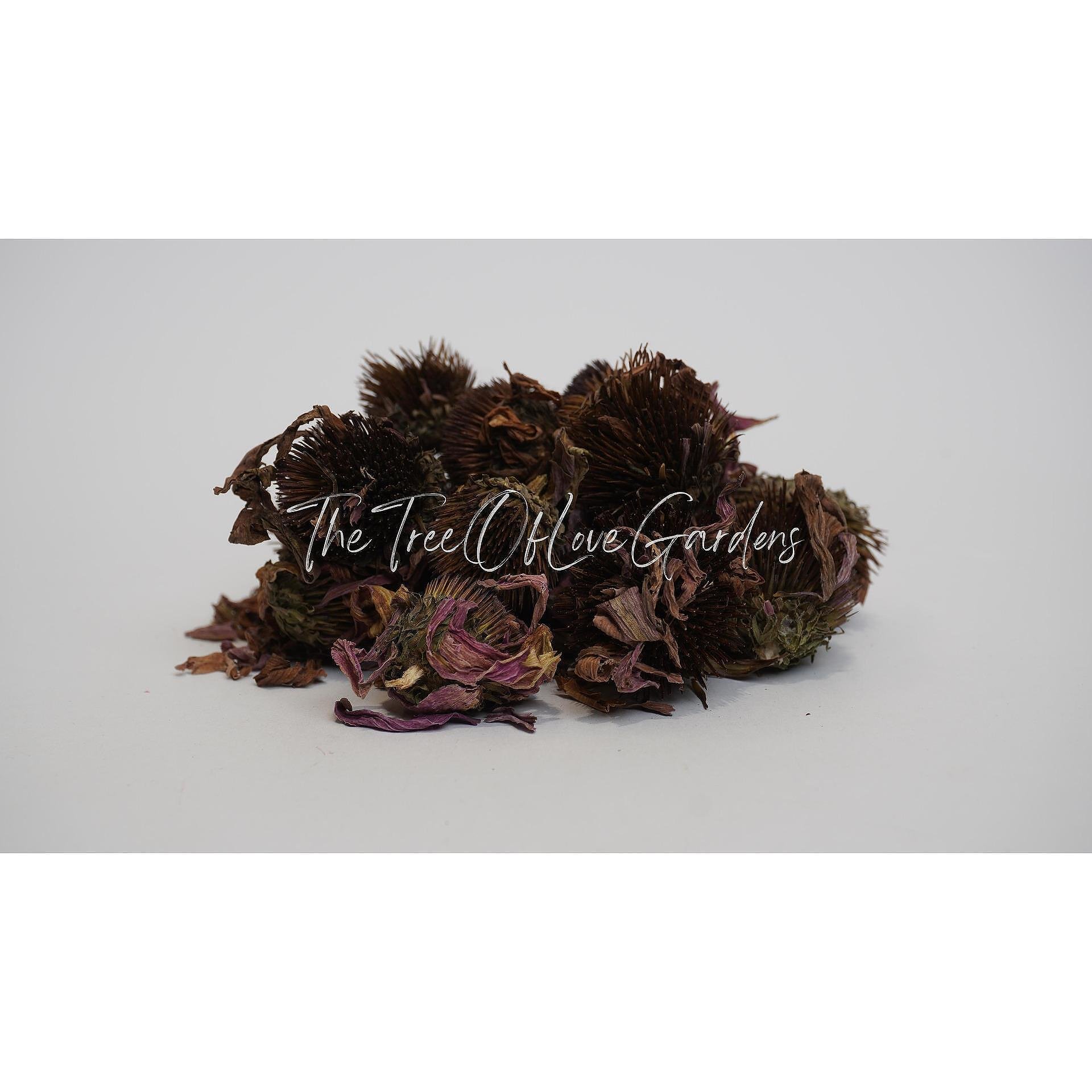
Our echinacea consists of the dried flower heads. Brewed as a tea, they give a light golden cup with a mild, earthy and slightly floral taste. Many people notice a gentle tingling on the tongue, a typical sign of echinacea. It is often blended with mint, lemon, ginger or elderberry.
The dried flowers are also used by herbalists to make tinctures and glycerites, and by gardeners and crafters for dried flower arrangements.
Our echinacea contains only dried Echinacea purpurea flowers with nothing added. It is sold by weight, from small packs to bulk.
How to Use Echinacea purpurea Flowers
- Echinacea tea: Use 1 to 2 teaspoons (about 1.5 to 3 g) per cup (8 fl oz / 250 ml). Pour over boiling water, cover and steep for 10 to 15 minutes, then strain.
- Blends: Combine with peppermint, lemon peel, ginger or elderberry.
- Tinctures: Herbalists macerate the dried flowers in alcohol or glycerin for several weeks.
Safety
Avoid if you are allergic to plants of the daisy family (Asteraceae), such as ragweed, chamomile or marigold. Do not use if you have an autoimmune condition or take medication that suppresses the immune system, unless advised by a qualified healthcare professional. If you are pregnant, nursing, taking medication or have a medical condition, consult a qualified healthcare professional before use. Keep out of reach of children.
Read our full guide: How to brew echinacea tea: our guide
Frequently Asked Questions
What is purple coneflower?
Purple coneflower is the common name for Echinacea purpurea, a North American wildflower of the daisy family.
Why does echinacea tea make my tongue tingle?
A gentle tingling sensation on the tongue is typical of echinacea and is normal.
Which part of the plant is this?
These are the dried flower heads of Echinacea purpurea.
Is echinacea tea caffeine free?
Yes. It contains no caffeine.
How should I store dried echinacea?
Keep it in an airtight container in a cool, dry and dark place.

Reviews
There are no reviews yet.