What Is Angelica Sinensis?
Angelica sinensis, known in Chinese as dang gui and often spelled dong quai, is a perennial plant of the carrot family native to the cool, high mountains of western China, especially Gansu province. It is also called Chinese angelica and is a relative of European garden angelica (Angelica archangelica).
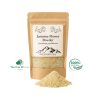
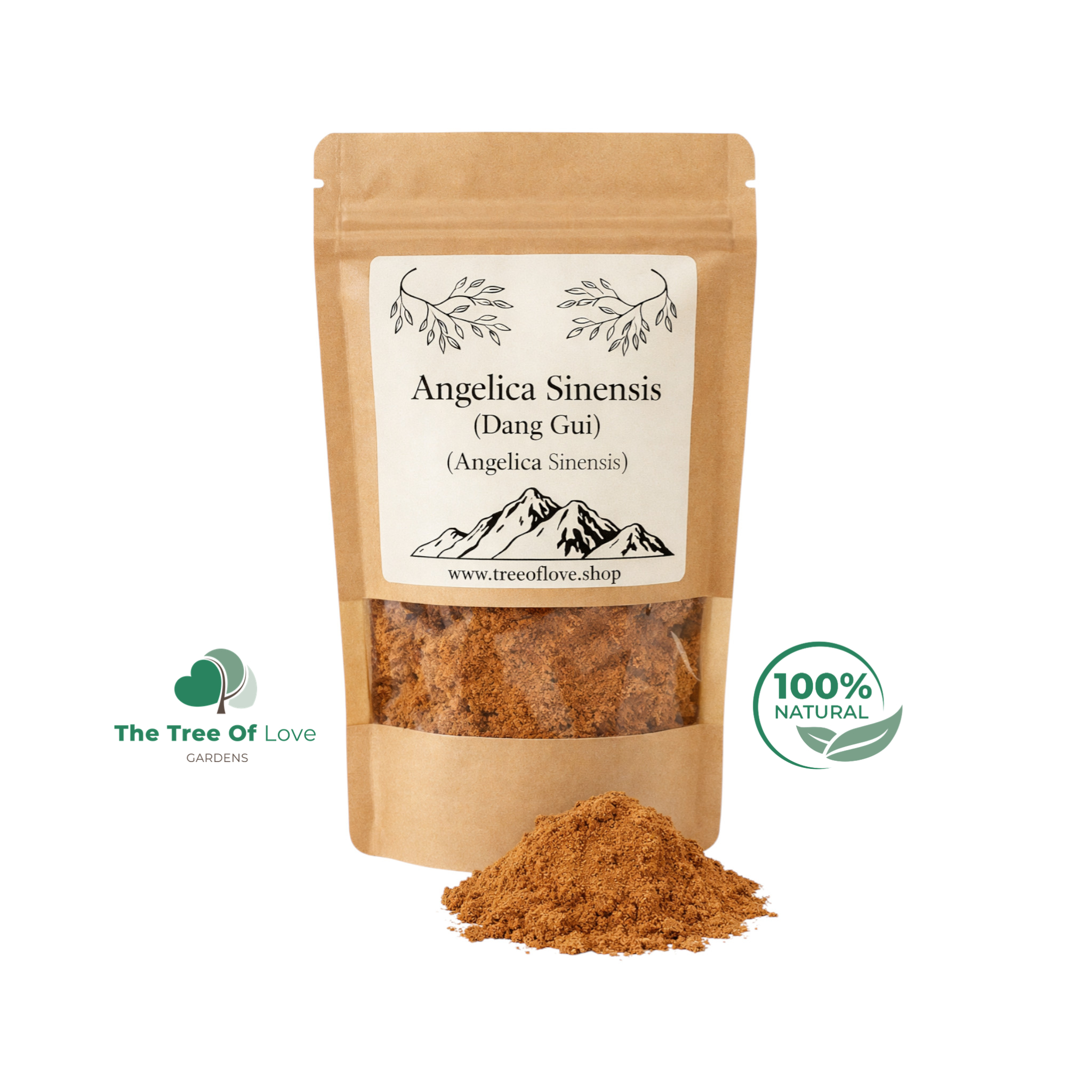
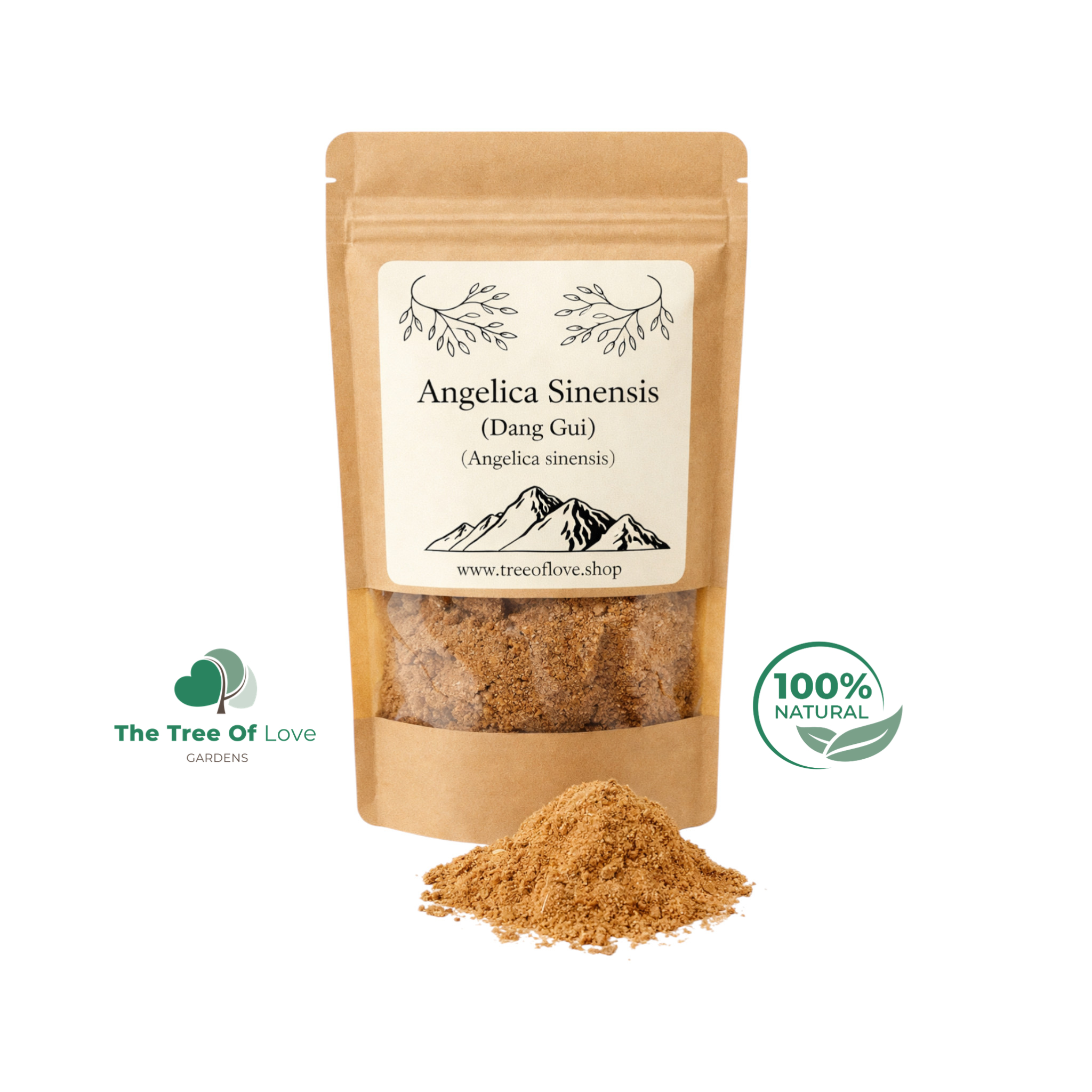
The plant grows tall, hollow stems with umbrella-shaped clusters of white flowers, but the part used is the fleshy, aromatic root. The roots are harvested in autumn, dried and, for this product, finely milled into a light brown powder with a warm, earthy, celery-like and slightly sweet-bitter aroma.
Dang gui is one of the most widely used roots in traditional Chinese herbal practice, with a recorded history of more than two thousand years. It is also a cooking ingredient: in China, Taiwan and Southeast Asia, dang gui is simmered in chicken soup, herbal duck and mutton broths, and it is a classic part of winter tonic soups.
The powder form makes it easy to measure and stir into broths, soups and herbal blends without long simmering.
Our Angelica sinensis powder contains only ground dang gui root with nothing added. It is sold by weight, from small packs to bulk.
How to Use Angelica Sinensis Powder
- Herbal soup: Stir 1/2 to 1 teaspoon (about 1 to 2 g) into a pot of chicken or vegetable broth with ginger, goji berries and jujubes, and simmer for 15 minutes.
- Herbal blends: Use small amounts in blends with other traditional roots and spices.
- Start small: Dang gui has a strong flavor, so begin with a small amount.
Safety
Do not use during pregnancy or while nursing. Avoid if you take blood-thinning medication or have a bleeding disorder, and stop use two weeks before surgery. Angelica may make skin more sensitive to sunlight. Consult a qualified healthcare professional before use. Keep out of reach of children.
Frequently Asked Questions
Is dang gui the same as dong quai?
Yes. Dang gui and dong quai are two spellings of the Chinese name for Angelica sinensis.
Is Angelica sinensis the same as garden angelica?
No. They are relatives. Garden angelica is Angelica archangelica, a European plant.
What does Angelica sinensis powder taste like?
It is earthy and warm, with a celery-like aroma and a slightly sweet-bitter taste.
How is dang gui used in cooking?
It is simmered in chicken, duck and mutton soups and herbal broths.
How should I store the powder?
Keep it in an airtight container in a cool, dry and dark place.

Reviews
There are no reviews yet.